
Are you looking for a way to completely seal your electrical connections from the elements? Standard tubing sometimes isn’t enough to prevent moisture intrusion and corrosion.
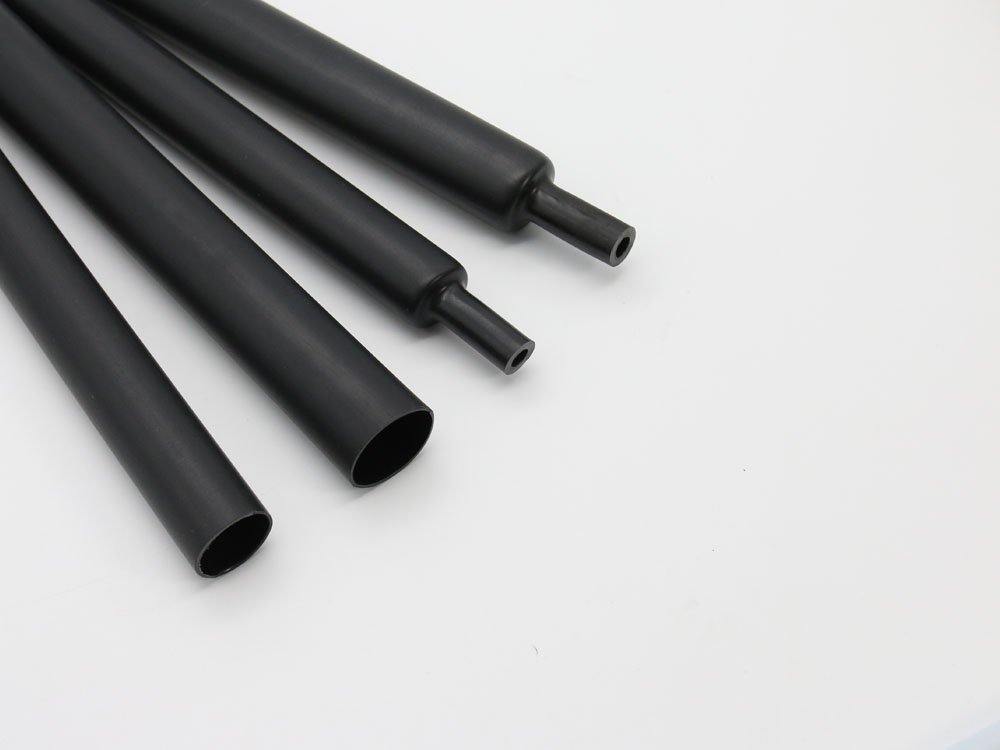
Dual wall heat shrink tubing consists of two layers: a cross-linked polyolefin outer wall and an inner layer of meltable adhesive. When heated, the outer wall shrinks while the inner adhesive melts, creating a rugged, waterproof seal.

Cross-section of dual wall heat shrink tubing
This two-layer construction offers protection that single-wall tubing just can’t match. If you need a truly reliable seal that can withstand harsh conditions, understanding dual wall tubing is essential. Let’s explore why this product is a game-changer for wiring protection.
Benefits of Dual Wall Heat Shrink Tubing with Adhesive?
Tired of your wire connections failing due to moisture or physical stress? These failures cause frustrating downtime and costly repairs that can hurt your bottom line.
Dual wall tubing provides superior environmental sealing against moisture and fluids, excellent strain relief for delicate connection points, enhanced electrical insulation, and superior protection against abrasion and mechanical damage.
 Protected wire connection in a harsh environment
Let’s break down why this tubing is so effective. The primary benefit is its sealing capability. When the inner meltable adhesive 1layer melts, it flows into every tiny gap and void around the wire and connector. As it cools, it creates a solid, flexible barrier that is completely waterproof and dust-tight. This prevents corrosion, which is a major cause of electrical failure.
Another huge advantage is strain relief. The semi-rigid seal that forms at the back of a connector prevents wires from bending and breaking under vibration or movement. This is critical in automotive or industrial applications. The tough outer wall also adds a layer of physical protection, guarding against cuts, abrasion, and chemicals. For my customers like Eric, this means fewer product failures, happier end-users, and a stronger brand reputation. The combination of environmental sealing and mechanical toughness makes it a complete protection solution.
Application of Adhesive Lined Dual Wall Tubing?
Do you know where this powerful tubing can make the biggest impact? Using it in the right place ensures maximum reliability for your electrical systems.
Adhesive lined dual wall tubing is ideal for sealing wire splices, breakouts, and connector-to-cable transitions. It’s widely used in automotive, marine, aerospace, and industrial applications where protection from moisture and mechanical stress is critical.
 Semi-rigid Adhesive lined Dual Wall tubing on an automotive harness
Think of any environment where wires are exposed to tough conditions. That’s where dual wall tubing shines. In the automotive world, it’s used to seal harnesses in the engine bay, protecting them from oil, antifreeze, and water spray. For marine applications, it’s a must-have for waterproofing connections on boats, where saltwater exposure is a constant threat. I’ve helped countless clients create rock-solid connections for bilge pumps and navigation lights using this tubing.
In industrial settings, it protects sensor cables and control wiring on heavy machinery from dust, chemicals, and abrasion. It’s also used in outdoor electrical installations to seal underground splices and protect cable jackets from damage. The versatility is incredible. Essentially, if you have a connection that absolutely cannot fail due to environmental factors, adhesive-lined dual wall tubing is the answer.
| Application | Primary Purpose |
|---|---|
| Automotive | Sealing engine bay harnesses from fluids and heat. |
| Marine | Waterproofing connections against saltwater corrosion. |
| Industrial | Protecting control and sensor cables on machinery. |
| Electrical | Sealing underground cable splices and outdoor breakouts. |
| Electronics/Home appliances | Sealing wiring connectors and cable splices. |
| DIY | Replacing the electrical tape to insulate and Seal. |
How to Choose the Right Dual Wall Heat Shrink Tubing?
Feeling overwhelmed by all the options for dual wall tubing? Choosing the wrong size or ratio will result in a poor seal, wasting your time and money.
To choose the right tubing, focus on the shrink ratio and diameter. The tubing’s un-shrunk diameter must fit over your largest component, and its shrunk diameter must be smaller than your smallest wire to ensure a tight seal.

Measuring a cable for heat shrink tubing
The most important factor is the shrink ratio. Common ratios are 3:1 and 4:1. A 3:1 ratio means the tube shrinks to one-third of its original size. This is perfect for most jobs, as it can cover a connector and still shrink down tightly onto the cable. A 4:1 ratio gives you even more flexibility for covering large, irregularly shaped objects.
To select the correct size, you need two measurements: the diameter of the largest part you need to slide the tube over, and the diameter of the smallest part you need it to seal. Your tube’s "recovered" (shrunken) diameter must be smaller than your wire, and its "expanded" (original) diameter must be larger than your connector. For special cases with extreme size differences, some suppliers like us at Lemore can even provide a 6:1 shrink ratio. This specialty tubing solves complex sealing challenges that standard ratios can’t handle, ensuring a perfect fit every time.
How to Apply and Shrink the Dual Wall Tubing?
Worried you might damage the tubing or your components with the heat gun2? A proper technique is all you need for a perfect, professional application every time.
To apply dual wall tubing, slide it over the connection and use a heat gun to apply even heat. Start in the middle and work towards the ends. Continue heating until the tube is fully shrunk and you see adhesive flowing from the ends.

Using a heat gun on dual wall tubing
The process is simple, but precision is key. First, position the tubing so it completely covers the splice or connector, with a little overlap on each side. Hold a heat gun about an inch away from the surface. Don’t use a lighter or torch; the uncontrolled flame will burn the material.
Begin applying heat to the center section of the tubing. Rotate the wire or move the heat gun around to heat it evenly. This helps prevent hot spots and ensures a uniform shrink. As you heat the center, you’ll see it start to shrink. Slowly work your way from the center out towards one end. This process pushes any trapped air out. Once one side is done, go back to the middle and work your way to the other end. The most important sign of a successful seal is seeing the clear or black adhesive start to bead up and flow out of the ends of the tube. This confirms the inner wall has melted and created a complete, void-free seal.
Conclusion
Dual wall heat shrink tubing offers the ultimate sealing and protection. Choosing the right size and applying it correctly provides a rugged, waterproof seal for any critical connection.